
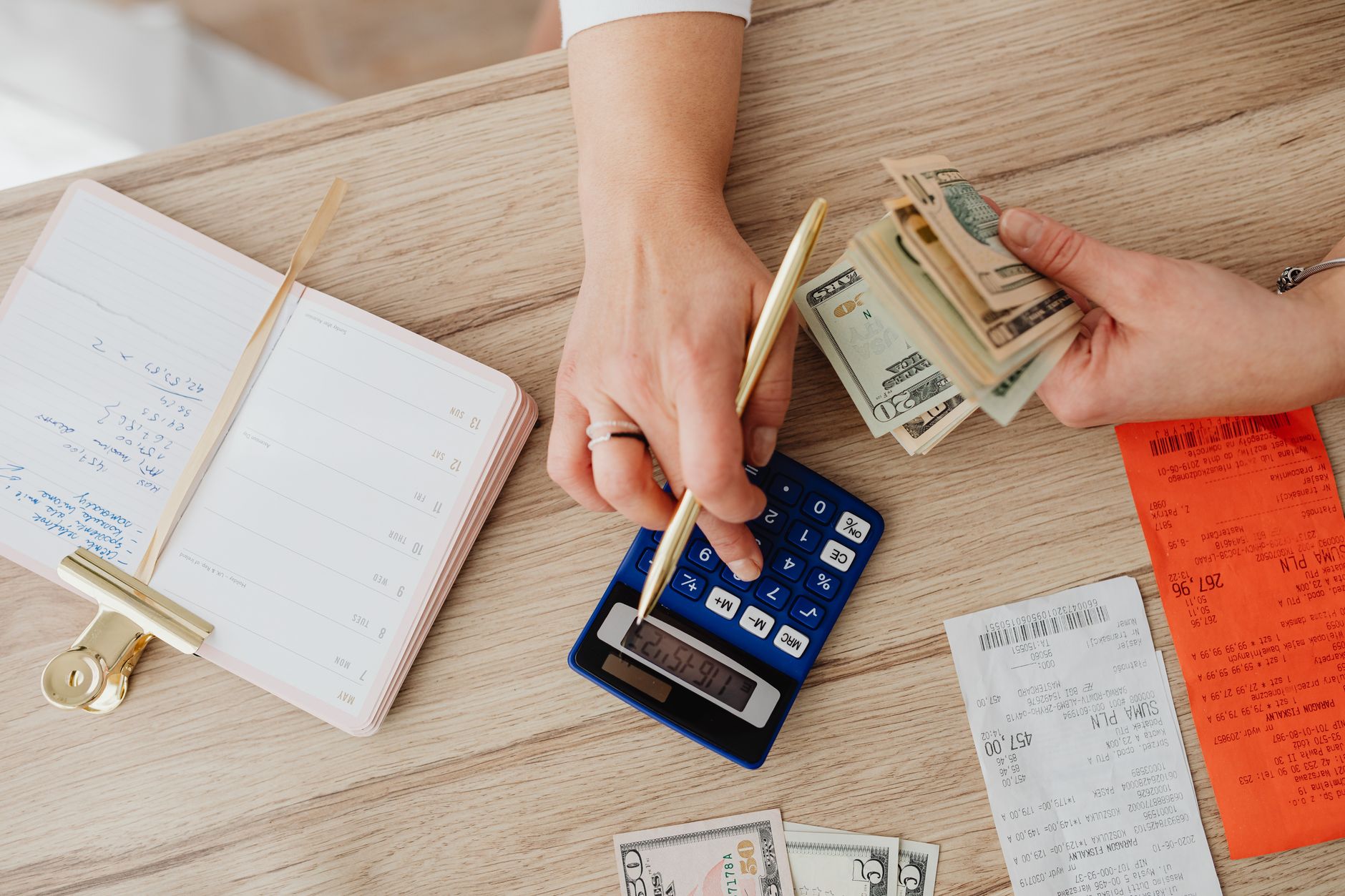
When money is tight, the hardest part is not the total. It is the timing. Rent is due on the 1st, the car payment on the 9th, and payday falls on the 15th, so even a month that technically balances can leave you short for a week. Learning how to budget between paychecks means planning around those dates, not just the monthly totals. The plan below uses a pen, a calendar, and some simple maths, and it works whether you are paid weekly, every two weeks, or twice a month.
Step 1: List Every Fixed Bill by Due Date
Start with what you cannot avoid. Pull up your bank statements from the last two months and write down every recurring payment, along with its due date and amount.
- Rent or mortgage
- Utilities: electricity, gas, water, internet, phone
- Insurance: car, renter’s, health
- Loan and minimum credit card payments
- Child care, transport passes, and subscriptions
Now sort that list by date, not by size. Then mark your paydays on the same calendar. You will quickly see which bills belong to which paycheck. Many people find that one paycheck carries rent and almost nothing else fits, while the other has room to spare.
Fix timing problems at the source
If one paycheck is overloaded, call your utility, phone, or card companies and ask to move the due date. Many lenders and service providers will shift a due date if you ask, which can solve a recurring crunch without cutting a single dollar.
Step 2: Work Out Your Paycheck Budget
For each pay period, use this simple formula:
Take-home pay − bills due before the next paycheck − buffer = flexible money
For example, suppose you take home $1,400 every two weeks. Bills due before the next payday total $950, and you set aside $50 as a buffer. That leaves $400 of flexible money for groceries, fuel, and everything else for 14 days.
Write the bills for this period on a short list and pay them, or set aside the money for them, the day the paycheck lands. Money that is still sitting in your account tends to get spent.
Step 3: Turn It Into a Daily Spending Allowance
A lump of “flexible money” disappears fast in the first few days of a pay period. Breaking it into a daily number makes it easier to manage.
Flexible money ÷ days until next payday = daily allowance
In the example above, $400 ÷ 14 days is about $28 a day. That covers food, fuel, and small purchases. If you spend $15 on Monday, Tuesday’s allowance can be $41. If you spend $60 on a big grocery shop, you know you need a few lighter days afterwards.
- Check your number every morning. It takes thirty seconds and prevents surprises.
- Plan known bigger costs, such as a weekly grocery run, by setting aside part of your allowance for that day.
- If a day goes over, do not abandon the plan. Recalculate: remaining money ÷ remaining days.
Tracking every purchase for a month, even roughly, is one of the fastest ways to see where the money is going. The CFPB offers a free printable spending tracker for exactly this. If you would rather see your bills, paydays, and daily number on your phone, an app such as Payday Runway can keep your bill dates and daily spending allowance in one place.
Step 4: Build a Small Buffer, Even When Money Is Tight
A buffer is not an emergency fund. It is a small cushion, often $25 to $100, that sits in your checking account so a slightly early bill or a forgotten subscription does not push you negative.
- Start tiny. Even $10 a paycheck adds up over a few months.
- Use found money. Put tax refunds, rebates, or cash gifts straight into the buffer.
- Do not touch it for everyday spending. It exists to catch timing mistakes.
- Once it is steady, grow it. A buffer of one week’s expenses makes the whole cycle calmer.
Step 5: Avoid Overdraft Fees and Payday Loans
The two most expensive ways to bridge a gap are overdrafts and payday loans, and both can turn a short squeeze into a long one.
Overdrafts
The CFPB explains that your bank or credit union cannot charge overdraft fees on ATM and most debit card transactions unless you have opted in. If you have not opted in, those transactions will generally just be declined when you are short. Many people on tight budgets prefer a declined card to a fee. Call your bank to check your status, and turn on low-balance alerts.
Payday loans
According to the CFPB, a payday loan is a short-term, high-cost loan, generally for $500 or less, usually due on your next payday. Fees often run $10 to $30 for every $100 borrowed, and a typical two-week loan with a $15 fee per $100 works out to an APR of almost 400 percent. Because the whole amount is due at once, many borrowers end up renewing or taking another loan.
Better options when you are short
- Call the company you owe before the due date and ask for a short extension or payment plan.
- Ask your employer whether they offer a pay advance.
- Check whether your credit union offers small, lower-cost short-term loans.
- Contact local assistance programs for help with utilities, food, or rent.
The CFPB’s payday loan resources explain your rights and what to consider before borrowing. If you are regularly short or juggling debt, a nonprofit credit counselor or a qualified financial professional can help you work out a plan for your specific situation.
Frequently Asked Questions
What is the easiest way to budget between paychecks?
List bills by due date, match them to the paycheck that comes before each one, set aside a small buffer, and divide what is left by the days until your next payday.
How much should I keep as a buffer in my checking account?
Start with whatever you can, even $10 to $25, and build toward a cushion that covers roughly a week of expenses.
Should I opt out of overdraft coverage?
If fees are hurting you, it may help. Without opt-in, most debit card and ATM transactions are declined instead of triggering a fee. Ask your bank how it handles checks and automatic payments, which can be treated differently.
Photo by https://kaboompics.com/ on Pexels
Leave a Reply