
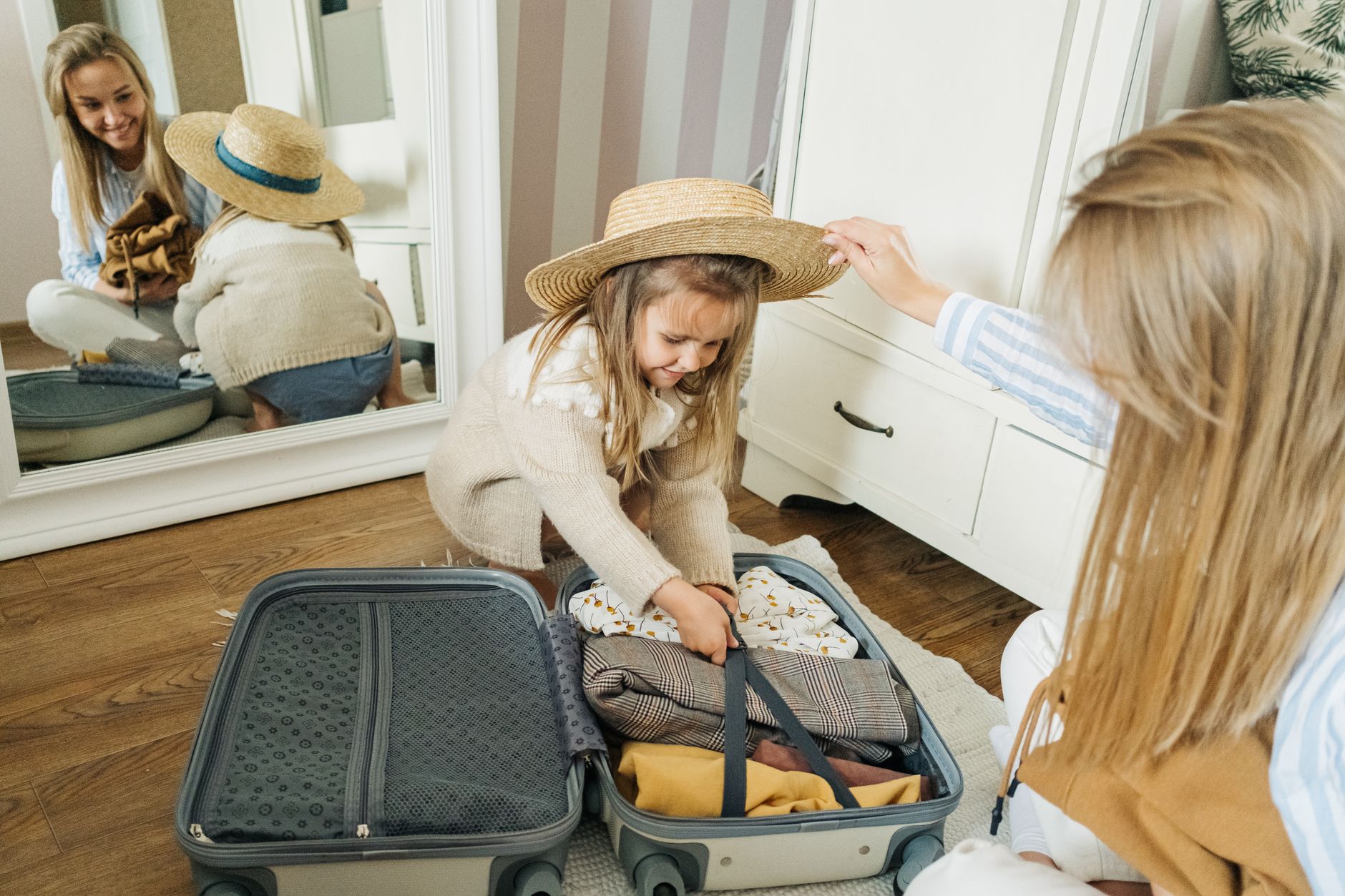
A good holiday travel packing list is the difference between arriving at Grandma’s calm and arriving without the baby’s inhaler, a phone charger, or the gift you spent three weeks choosing. Family trips multiply every packing problem: more people, more stuff, more opinions, and usually a tight departure window. The fix is not packing more. It is packing with a system, so each person’s needs are covered once and nothing gets packed twice.
Start Your Holiday Travel Packing List Per Traveler, Not Per Suitcase
The most common family packing mistake is building one giant list for the whole household. Items fall through the cracks because everyone assumes someone else packed them. Instead, give every traveler their own short list, then decide which bag each item goes in.
- Count outfits by days, not by guesses. For a trip of five days or fewer, pack one outfit per day plus one spare for each child under ten. For longer trips, plan on doing laundry rather than packing more.
- Plan one “event” outfit per person for the holiday dinner or service, and pack it last so it stays on top and wrinkle-free.
- Use packing cubes or labeled bags per person. When a shared suitcase is opened at the destination, each person grabs their own cube instead of digging.
- Give older kids ownership. Children around eight and up can pack their own cube from a written or picture checklist. You check it; they learn the skill.
Keeping these lists somewhere you can reuse next year saves the most time of all, and an app such as PackWise can keep each traveler’s checklist in one place so you start from last year’s version instead of a blank page.
Packing for Kids: The Bag That Saves the Trip
Every family trip needs one “day bag” that stays within arm’s reach of an adult. Whether you are flying or driving, this is the bag you will open ten times before you arrive.
What goes in the kids’ day bag
- A full change of clothes for each child under six (spills and car sickness do not wait for a rest stop)
- Snacks in small portions, plus an empty water bottle per person to fill after security
- Wipes, tissues, a small trash bag, and a zip bag for wet or soiled clothes
- One or two new, small activities per child, revealed one at a time during the trip
- Headphones sized for kids, and downloaded shows or games that work offline
- Comfort items: the stuffed animal or blanket that bedtime depends on
For babies and toddlers, add diapers for the travel day plus a buffer of several extra, formula or food, and a lightweight blanket. Many families find it easier to buy bulky consumables like diapers at the destination rather than packing a week’s supply.
Carry-On Rules: TSA Liquids, Gels, and What Goes Where
If you are flying, the carry-on rules shape the whole packing list. Under the TSA liquids rule, each traveler may bring liquids, aerosols, gels, creams, and pastes in containers of 3.4 ounces (100 milliliters) or less, all fitting in one quart-sized bag. Each passenger gets one bag, so a family of four has four quart bags to work with. Split toiletries across them rather than cramming everything into one.
Two exceptions matter for families. Medications are exempt from the 3.4-ounce limit, and so are infant and child nourishments such as formula, breast milk, and baby food. Declare them to the officer at the start of screening and expect that they may be inspected separately.
Everything larger, such as full-size shampoo, sunscreen, or a bottle of wine for your host, goes in checked luggage. When in doubt, pack it in the checked bag or plan to buy it when you arrive.
Medications and Health Essentials
Medications are the one category you cannot afford to lose with a delayed suitcase. Keep all of them in your carry-on or the car’s front seat, never in checked luggage. The TSA allows medically necessary liquids in larger amounts in reasonable quantities for your trip, as long as you declare them at the checkpoint.
- Pack enough of every prescription for the trip plus a few extra days in case of weather delays.
- Keep pills in their original labeled containers, which makes screening and any pharmacy refills simpler.
- Bring a written list of each person’s medications, doses, and allergies, and a photo of insurance cards.
- Add a small kit: children’s fever reducer, bandages, motion sickness remedies, and a thermometer.
If anyone in the family has a complex condition, refrigerated medication, or needs to adjust dosing across time zones, ask your doctor or pharmacist for advice specific to your situation before you leave.
Chargers, Power Banks, and Electronics
Chargers are the item most often left behind, usually because they are still plugged into the wall at home. Make a habit of packing them the night before and using a travel cord instead of your everyday one.
- Count cables per device, not per person. A family with four phones, two tablets, and a handheld console needs at least six cables or a multi-port charger.
- Bring a short extension cord or power strip without a surge protector; guest rooms rarely have enough outlets.
- Pack power banks and spare lithium batteries in your carry-on only. The FAA’s PackSafe guidance requires spare lithium batteries and power banks to stay in the cabin, and limits most of them to 100 watt-hours each.
- If a carry-on gets gate-checked, take the power banks out and keep them with you.
Packing for Holiday Weather and Traveling With Gifts
Dress for the temperature swing
Holiday trips often involve a temperature swing: a warm house, a cold airport, a snowy driveway. Layers beat bulk. Pack one warm coat per person (and wear it while traveling instead of packing it), plus a fleece or sweater, hats, gloves, and waterproof boots if snow is likely. Check the destination’s forecast three or four days before you leave, then again the night before, and adjust.
For road trips, keep a winter car kit in the trunk: blankets, an ice scraper, a flashlight, water, snacks, and a phone charger that works from the car.
Travel with gifts without the stress
Gifts are where holiday packing gets tricky. A few habits make it easier:
- Don’t wrap gifts before flying. The TSA advises that wrapped gifts may need to be unwrapped if they alarm during screening. Use gift bags or wrap after you arrive.
- Ship ahead when possible. Sending gifts directly to your destination frees up luggage space and avoids baggage fees.
- Watch liquid and gel gifts. Perfume, lotions, snow globes, and jarred foods follow the same liquids rule in carry-ons. Put them in checked luggage or ship them.
- Leave room for the return trip. Pack your suitcases about three-quarters full on the way out, or bring a foldable duffel for the gifts you receive.
Frequently Asked Questions
How far in advance should I start a holiday travel packing list?
Start the list about a week ahead so you have time to buy missing items or do laundry, then do the actual packing one to two days before departure. Leave a short “last-minute” list for things you use daily, like toothbrushes and chargers.
Can kids bring their own liquids in a carry-on?
Yes. Each passenger, including children, can carry one quart-sized bag of liquids in containers of 3.4 ounces or less. Formula, breast milk, and baby food are exempt from the size limit but should be declared at screening.
Should I pack medications in checked luggage?
No. Keep medications in your carry-on or personal bag so a lost or delayed suitcase does not leave anyone without them, and carry a few extra days’ worth in case of travel delays.
Leave a Reply