
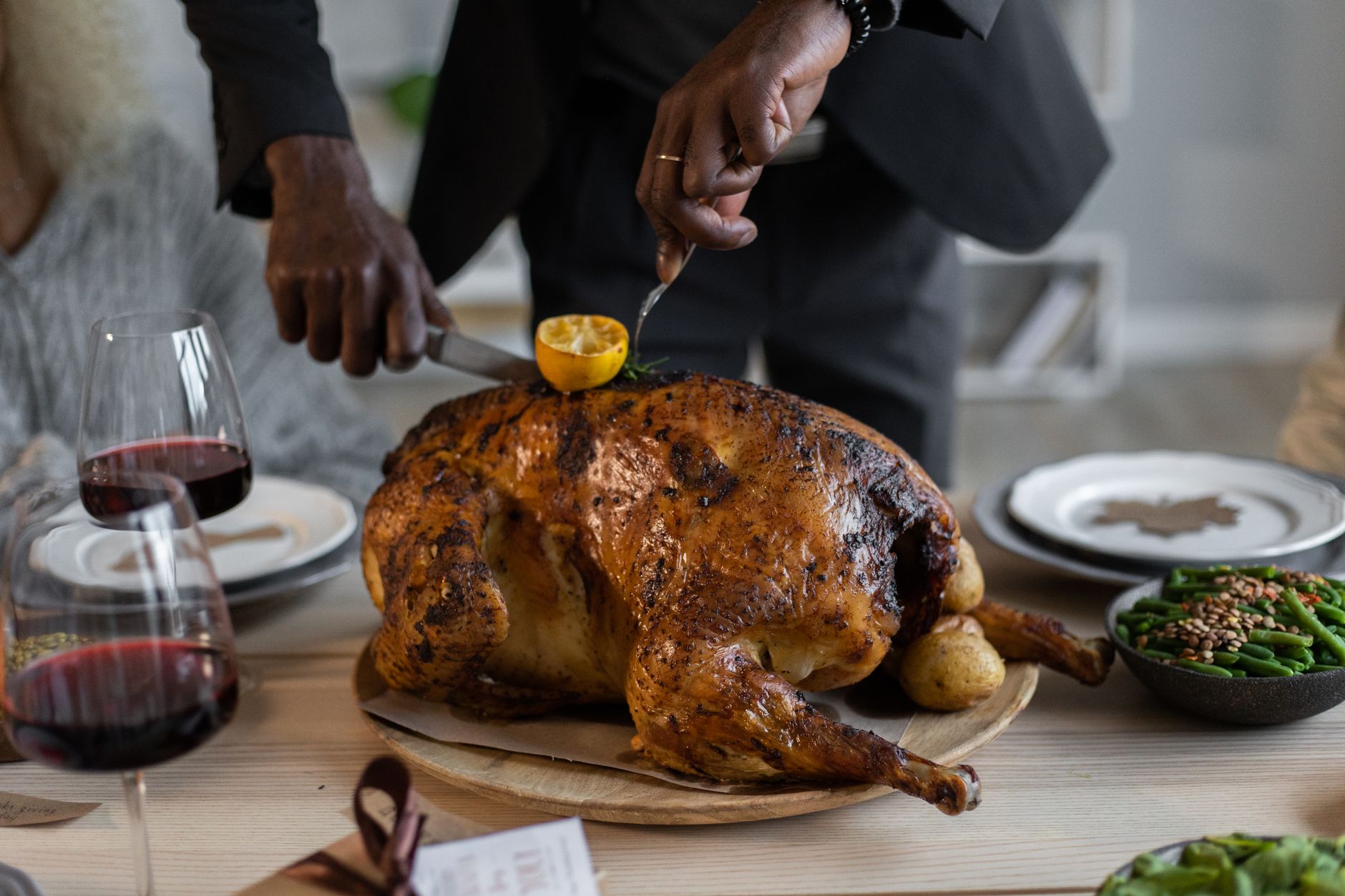
Good Thanksgiving meal planning is mostly arithmetic and scheduling. The cooking itself is not that hard; what goes wrong is a turkey that is still frozen on Wednesday night, a single oven asked to do four things at 2 p.m., or a grocery run on the busiest shopping day of the year. This guide walks through the numbers, a grocery list structure, and a day-by-day timeline you can adapt to your own menu.
Thanksgiving Meal Planning Starts With Headcount Math
Before you choose a single recipe, confirm how many people are coming and who they are. Twelve adults eat differently from six adults and six small children. Ask about allergies and dietary needs at the same time you ask for an RSVP.
How much turkey per person
The USDA’s Let’s Talk Turkey guide recommends allowing 1 pound of turkey per person. That figure already accounts for bones, so a 14-pound bird feeds about 14 people. If you want generous leftovers, round up a few pounds.
Rules of thumb for the sides
- Plan for variety, not volume. With five or more side dishes, each one only needs to serve about half the table, because people take smaller portions of more things.
- Scale recipes in writing. When you double or triple a recipe, write the new quantities down before you shop. Mental math at the store is where shortages start.
- Count pies by slices. A standard pie cuts into about eight slices. For a crowd that likes dessert, plan roughly one pie per six to eight guests across all flavors.
Build a Grocery List Organized by Store Section
Once the menu is fixed, write a single master list and sort it by store section: produce, dairy, meat, bakery, pantry, frozen, and beverages. Sorting by aisle cuts shopping time noticeably and makes missing items obvious.
Split the list into two trips:
- The early trip (about ten days out): the frozen turkey, pantry staples, canned goods, baking supplies, butter, broth, spices, foil, roasting bags, and drinks. Shelf-stable items are easiest to find before the last-week rush.
- The fresh trip (two to three days out): produce, fresh herbs, cream, eggs, bread, and anything delicate.
Check your pantry against the list before the first trip. Spices and baking powder are the classic “I thought we had that” items. Storing your recipes and their scaled ingredient lists together helps here, and an app such as Recipe Keeper can keep the menu, recipes, and shopping list in one place for next year.
Turkey Thawing: The Date That Drives Everything
A frozen turkey is the one item with a hard deadline, so put its thaw date on the calendar the day you buy it. The USDA’s guidance on safe thawing is specific:
- Refrigerator thawing: allow about 24 hours for every 4 to 5 pounds. A 20-pound turkey needs four to five full days in the fridge, so it goes in on the Friday or Saturday before Thanksgiving.
- Cold water thawing: allow about 30 minutes per pound, keep the turkey in its original wrapping, submerge it fully, and change the water every 30 minutes. Cook it immediately after thawing.
- Never thaw on the counter. The outside of the bird sits at unsafe temperatures long before the inside thaws.
Make sure there is room in your refrigerator before the turkey arrives, and put it on a rimmed tray on the bottom shelf so it cannot drip on anything else.
Make-Ahead Dishes and a Prep Timeline
The secret to a calm Thanksgiving is doing as much as possible before Thursday. Here is a timeline that works for most menus:
One to two weeks before
- Finalize the guest list and menu; assign dishes to guests who offer to bring something.
- Do the early grocery trip and buy the turkey.
- Make and freeze pie dough, dinner rolls, and stock.
Monday to Tuesday
- Make cranberry sauce; it keeps well in the fridge.
- Do the fresh grocery trip.
- Chop onions, celery, and carrots and store them in sealed containers.
- Cube and dry bread for stuffing.
Wednesday
- Bake pies.
- Assemble casseroles (green beans, sweet potatoes, mac and cheese) and refrigerate them unbaked.
- Make mashed potatoes ahead if you plan to reheat them in a slow cooker.
- Set the table and lay out serving dishes with a sticky note on each saying what goes in it.
Oven Scheduling on Thanksgiving Day
Most home kitchens have one oven, and the turkey occupies it for hours. Work backward from the time you want to eat.
According to the USDA’s roasting chart, a 12- to 14-pound unstuffed turkey takes about 3 to 3¾ hours at 325°F, and the bird should rest about 20 minutes before carving. Always confirm doneness with a food thermometer: the turkey is safe at 165°F, checked in the innermost part of the thigh and wing and the thickest part of the breast.
That resting time is your oven window. While the turkey rests under foil, raise the oven temperature and bake the casseroles and rolls. To free up even more space:
- Use a slow cooker for mashed potatoes or stuffing.
- Cook green vegetables on the stovetop.
- Serve cranberry sauce and some salads cold.
- Bake stuffing in a separate dish rather than inside the bird; the USDA’s stuffing and food safety guidance recommends this for more even cooking, and stuffing must also reach 165°F.
Food Safety for Leftovers
Leftovers are half the point of Thanksgiving, so handle them correctly. The USDA’s leftovers and food safety guidance sets out clear rules:
- Refrigerate leftovers within 2 hours of cooking. Set a timer when dinner is served so the food doesn’t sit out through dessert and football.
- Carve the remaining turkey off the bone and store it in shallow containers so it cools quickly.
- Use refrigerated leftovers within 3 to 4 days, or freeze them for 3 to 4 months.
- Reheat leftovers to 165°F, and bring gravy, soups, and sauces to a rolling boil.
Label containers with the date before they go into the fridge, so nobody has to guess on Monday.
Frequently Asked Questions
When should I start Thanksgiving meal planning?
Start about two weeks ahead. That gives you time to confirm guests, plan the menu, buy a frozen turkey, and leave enough refrigerator thawing time, which can be five days for a large bird.
Can I thaw a turkey in time if I forgot?
Yes, with the cold water method: about 30 minutes per pound, with the water changed every 30 minutes. A 16-pound turkey needs roughly eight hours this way, and it must be cooked right after thawing.
How long are Thanksgiving leftovers safe to eat?
Refrigerated leftovers are best used within 3 to 4 days. If you won’t finish them by then, freeze portions within that window and reheat them to 165°F when you eat them.
Photo by Monstera Production on Pexels
Leave a Reply